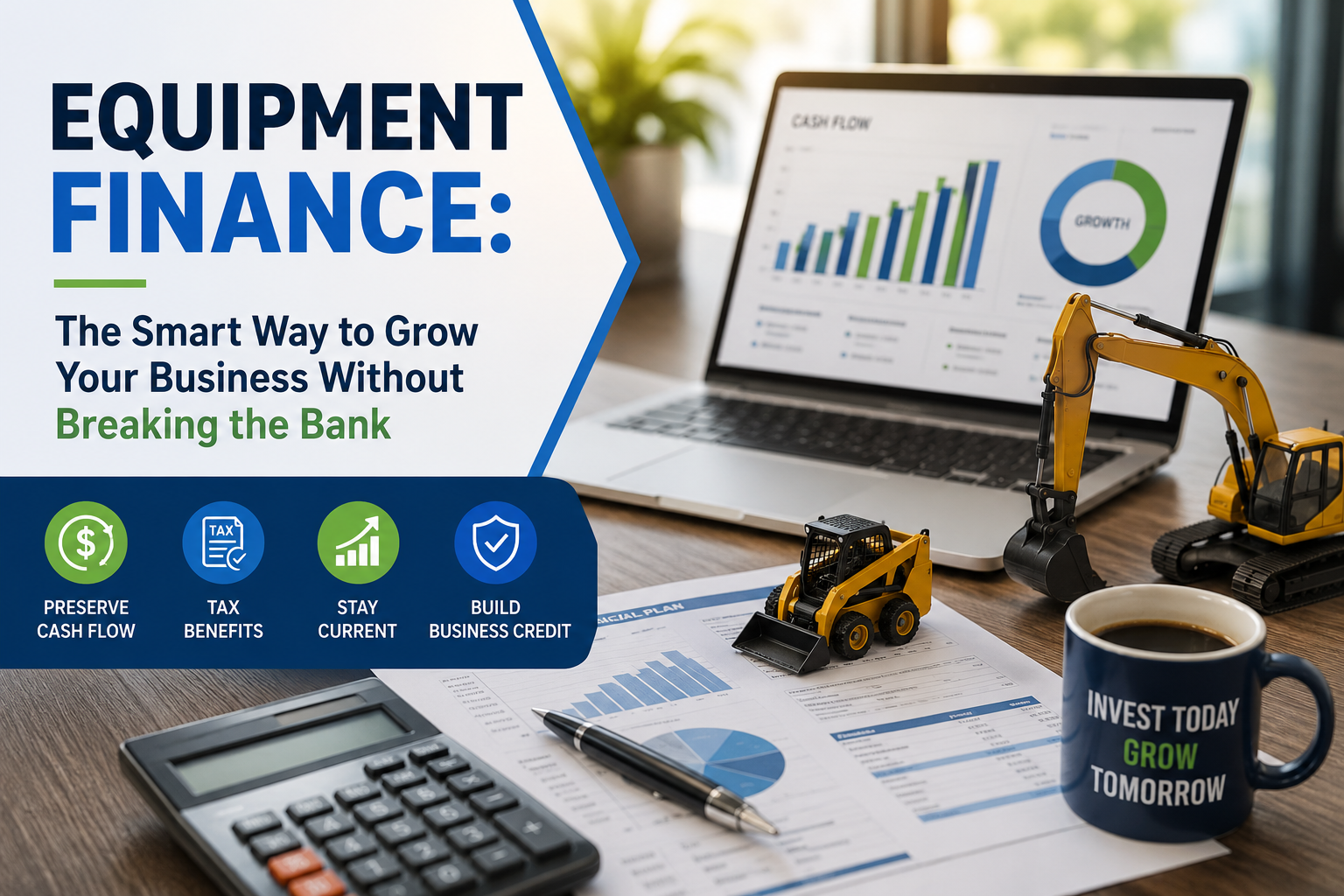
Equipment Finance: The Smart Way to Grow Your Business Without Breaking the Bank
Growing a business means investing in the right tools—but purchasing equipment outright can strain cash flow and tie up capital you could use elsewhere. Equipment finance is the solution that lets you acquire the machinery, vehicles, and technology your business needs today while spreading costs over time. Whether you’re a tradie, manufacturer, or service provider, equipment finance gives you flexibility, tax benefits, and the ability to upgrade as your business evolves.
What Is Equipment Finance?
Equipment finance is a form of asset-based lending where a lender purchases equipment on your behalf, and you repay the cost over an agreed term (typically 2–5 years). The equipment serves as security for the loan, which means lower interest rates than unsecured borrowing. You get immediate access to the equipment you need, while the lender holds ownership until the loan is fully repaid.
Unlike a personal loan, equipment finance is designed specifically for business assets—making it more affordable and tax-efficient than alternatives.
Key Benefits of Equipment Finance
Preserve Cash Flow — Instead of a large upfront payment, you make manageable monthly repayments that align with your business revenue. This keeps your working capital free for operations and growth.
Tax Deductions — Loan repayments are often tax-deductible business expenses, reducing your taxable income. Speak with your accountant about how equipment finance impacts your specific situation.
Stay Current — Technology and machinery improve constantly. Equipment finance lets you upgrade every few years rather than being locked into outdated gear for a decade.
Predictable Costs — Fixed repayment schedules mean no surprises—your monthly outgoing is known and budgeted.
Build Business Credit — Successfully repaying equipment finance strengthens your credit profile and makes future borrowing easier.
What Equipment Can You Finance?
Equipment finance covers a wide range of business assets:
Vehicles and vans
Heavy machinery and excavators
IT hardware and software licenses
Medical and dental equipment
Commercial kitchen equipment
Manufacturing and production tools
Hospitality and retail point-of-sale systems
Most lenders will finance equipment valued between $5,000 and $500,000+, though limits vary by lender and your business profile.
Who Qualifies for Equipment Finance?
Equipment finance is flexible and accessible to most business types:
Sole traders and partnerships
Small-to-medium enterprises (SMEs)
Established businesses and new start-ups (with trading history)
Businesses with good or improving credit
Lenders assess your business’s ability to service the debt based on turnover, profitability, and credit history—not just personal credit score.
Equipment Finance vs. Buying Outright
If you have $100,000 to spend on equipment, you might be tempted to buy outright. But equipment finance often makes more business sense:
Buy OutrightEquipment FinanceInitial Outlay$100,000$0–5,000Monthly CostNone (already paid)~$1,500–2,000Cash Flow ImpactSevere (cash depleted)Manageable (steady repayments)Opportunity CostHigh (capital locked in equipment)Low (capital available for growth)Tax DeductibilityDepreciation onlyFull repayment deductibleFlexibility to UpgradeLow (sunk cost)High (new finance term)
Frequently Asked Questions
How long does equipment finance approval take?
Most lenders provide approval within 48–72 hours for straightforward applications. You’ll need business financials, ownership details, and equipment quotes. Fast-track lenders can sometimes approve within 24 hours.
What’s the difference between equipment finance and a business loan?
Equipment finance is secured against the specific asset, so rates are lower and terms are longer. Business loans are unsecured (or secured against other assets) and typically have shorter terms and higher rates. Equipment finance is usually cheaper if you’re buying specific assets.
Can I refinance equipment I already own?
Yes. If you bought equipment outright but now need cash, a sale-and-leaseback arrangement or equipment refinance can unlock that capital. Speak with a finance broker about your options.
What happens at the end of the loan term?
Once repayments are complete, you own the equipment outright. Some arrangements include a final balloon payment or residual value buy-out—check your contract.
Getting Started with Equipment Finance
Equipment finance is one of the fastest and most efficient ways to grow without straining your cash flow. Whether you’re a tradie upgrading your fleet, a manufacturer investing in new machinery, or a service business modernizing your tech stack, equipment finance makes it affordable.
Ready to explore your options? Chat with our finance team today. We’ll match you with the right solution for your business and equipment needs.